
Wilder Auto Body has updated its consumer information on post-collision towing, adding September guidance for drivers who need to determine how a damaged vehicle should be transported after an accident.
The update focuses on a specific stage of the collision process that occurs before professional vehicle evaluation begins. It explains what drivers can observe at the scene, what information can be useful when requesting transportation, and why the ability of a vehicle to start or move does not by itself establish its overall condition after an impact.
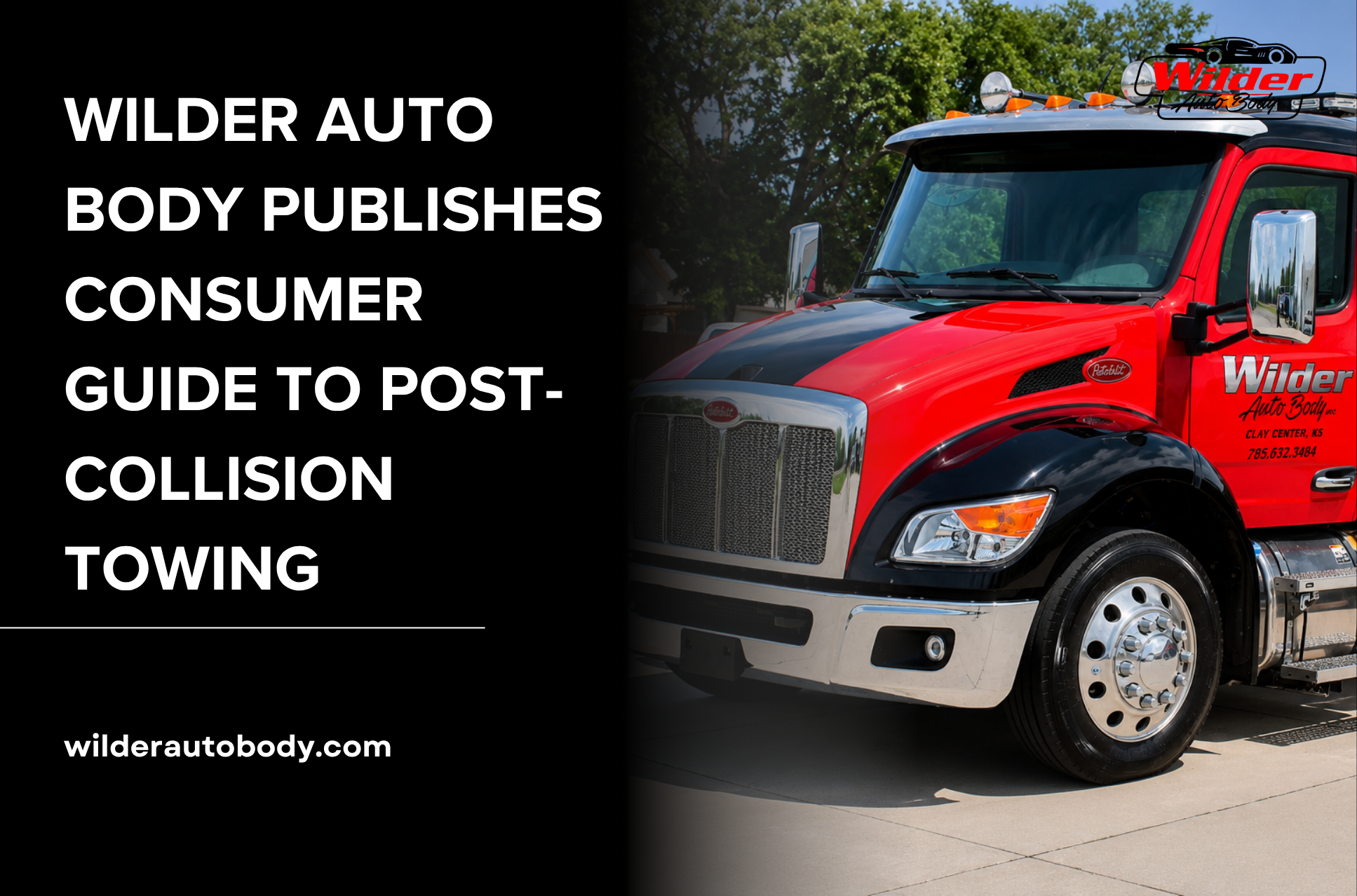
The updated information is available through Wilder Auto Body's Towing Services resource at https://wilderautobody.com/towing/.
The September update addresses circumstances in which collision damage can make transportation a consideration. Some conditions may clearly interfere with normal vehicle operation, while others can be less apparent from exterior appearance alone.
Observable conditions can include damaged wheels or tires, broken glass, loose exterior components, visible fluid beneath the vehicle, or a bumper or fender that has shifted toward a tire. Drivers may also notice warning indicators or changes in vehicle operation after an accident.
These observations do not establish the complete extent of collision damage or determine that a tow is necessary. They can, however, provide relevant information when a driver is considering whether to continue operating the vehicle or arrange transportation for further evaluation.
The September update also identifies information drivers can communicate when requesting a tow. Depending on the circumstances, this can include the vehicle's location, whether it starts, whether wheels or tires appear damaged, whether airbags deployed, and whether exterior components are loose or contacting the ground.
This approach allows drivers to describe observable conditions without requiring them to diagnose collision damage or attempt roadside repairs.
One of the primary clarifications in the updated information concerns the difference between vehicle mobility and vehicle condition.
A vehicle may start and move after an accident even though its complete condition has not been evaluated. Conversely, visible exterior damage does not automatically establish that a vehicle requires towing.
The appropriate transportation decision depends on the circumstances surrounding the individual vehicle and incident.
Modern vehicle technology can add another consideration. Cameras, radar equipment, parking sensors, wiring, and other electronic components may be positioned within or near exterior areas affected during collisions.
An impact near this equipment does not independently establish that a particular system is damaged or that scanning, calibration, or another technical procedure will be required. Those determinations occur during subsequent evaluation based on the vehicle, documented damage, affected systems, and applicable repair information.
For this reason, the September update distinguishes the immediate transportation decision from the later collision-repair assessment.
Towing moves a vehicle to an appropriate location. Once it arrives at a repair facility, technicians can document observable damage, evaluate affected areas, and develop a repair plan based on the condition of the individual vehicle.
Information about that subsequent process is available through Wilder Auto Body's Collision Repair Services resource at https://wilderautobody.com/collision-repair/.
The updated towing information also clarifies that service circumstances can vary according to vehicle location, accessibility, condition, and transportation requirements.
Rather than defining a universal towing area or implying availability for every situation, Wilder Auto Body advises consumers to confirm service availability for the circumstances of an individual request.
The September update does not suggest that every collision requires towing. Its purpose is to provide consumers with clearer information for the period immediately following an accident, particularly when they are uncertain about moving a damaged vehicle before it has been professionally evaluated.
Towing can also be relevant outside collision situations. A breakdown or another condition that prevents practical vehicle operation can create a need for transportation even when accident damage is not involved.
By updating its towing information for September, Wilder Auto Body is adding more specific consumer guidance about what drivers can observe and communicate before a damaged vehicle reaches the repair facility. The update complements the company's existing collision-repair information while keeping transportation and repair evaluation as distinct stages of the process.
Additional information about Wilder Auto Body's services for the area is available through its Clay Center service information at https://wilderautobody.com/clay-center-ks/.
About Wilder Auto Body
Wilder Auto Body is a family-owned auto body repair business serving Clay Center and surrounding Kansas communities. The company provides collision repair, auto body repair, paintless dent repair, hail damage repair, ADAS calibration, aluminum repair, towing, and related vehicle repair services.
###
For more information about Wilder Auto Body Inc, contact the company here:
Wilder Auto Body Inc
Kyle Wilder
(785) 632-3484
office@wilderautobody.com
138 E Crawford St, Clay Center, KS 67432
